Form I-9 Retention Calculator
Enter an employee's first day of employment and the day their employment ended. The calculator applies the federal rule, three years after the hire date or one year after employment ends, whichever is later, and shows both dates so you can see which one governs. Batch mode dates a whole list of former employees at once.
Use the tool
Form I-9 Retention Calculator, vettedpad.com
Keep this Form I-9 until
March 6, 2026
8 CFR 274a.2(b)(2)(i)(A)
- Three years after the hire date
- March 6, 2026 (governs)
- One year after employment ended
- August 30, 2025
Three years after the hire date is later, so it governs (they worked under two years). The form may be destroyed from March 7, 2026.
This tool applies the federal retention rule as written. It is not legal advice, and state law may add steps for personnel records.
8 CFR 274a.2(b)(2)(i)(A)
Batch mode: date a list of employees at once
Name or role, first day of employment, date employment ended (or “employed”). Commas, semicolons or tabs, so a spreadsheet paste works. Up to 300 lines; nothing leaves your browser.
4 lines read, all dated.
| Employee | Keep until | First day | Ended | Hire + 3 years | End + 1 year |
|---|---|---|---|---|---|
| Warehouse associate | 2026-03-06 | 2023-03-06 | 2024-08-30 | 2026-03-06 | 2025-08-30 |
| Office manager | 2026-11-14 | 2019-06-03 | 2025-11-14 | 2022-06-03 | 2026-11-14 |
| Seasonal driver | 2027-03-01 | 2024-02-29 | 2024-12-20 | 2027-03-01 | 2025-12-20 |
| Bookkeeper | Keep on file | 2021-09-13 | Still employed | 2024-09-13 |
What it computes
An employer must keep a Form I-9 for every employee for as long as they work there. Once employment ends, the regulation sets the date the form can go:
“In the case of an employer, three years after the date of the hire or one year after the date the individual's employment is terminated, whichever is later”
8 CFR 274a.2(b)(2)(i)(A)
The calculator works out both dates and keeps the later one. The hire date is the day work for pay began, the date you entered in Section 2's First Day of Employment field, not the day the offer was accepted or the day the paperwork was signed. Our Form I-9 employer guide walks through that field.
USCIS gives a shortcut in its Handbook for Employers (M-274, section 10.0): “If they worked for less than two years, retain their form for three years after the date you entered in the First Day of Employment field. If they worked for more than two years, retain their form for one year after the date they stop working for you.” The calculator gives the same answer without you counting the tenure.
February 29 dates
The regulation does not say what “three years after” February 29 means in a year without one. This tool moves the date to March 1, the later of the two possible days, so it can never tell you to destroy a form early. If you prefer February 28, you are one day stricter than the rule needs.
Rehires, and recruiters who refer for a fee
If you rehire someone and update their original Form I-9 on Supplement B instead of completing a new one, the clock starts from the original form: keep it “for a period of three years commencing from the date of the initial execution of the Form I-9 or one year after the individual's employment is terminated, whichever is later” (8 CFR 274a.2(c)(2)). Enter the date the original form was first completed in place of the first day. A recruiter or referrer for a fee keeps the form three years after the date of hire (8 CFR 274a.2(b)(2)(i)(B)).
An inspection comes with at least three business days' notice, so forms kept off site must be retrievable within that time. A refusal or delay in presenting them is itself a retention violation.
8 CFR 274a.2(b)(2)(ii)
Failing the verification rules in 8 CFR 274a.2(b), which include retention, costs $288 to $2,861 per individual for violations after November 2, 2015. See I-9 penalties for the full table.
8 CFR 274a.10(b)(2)
Worked example
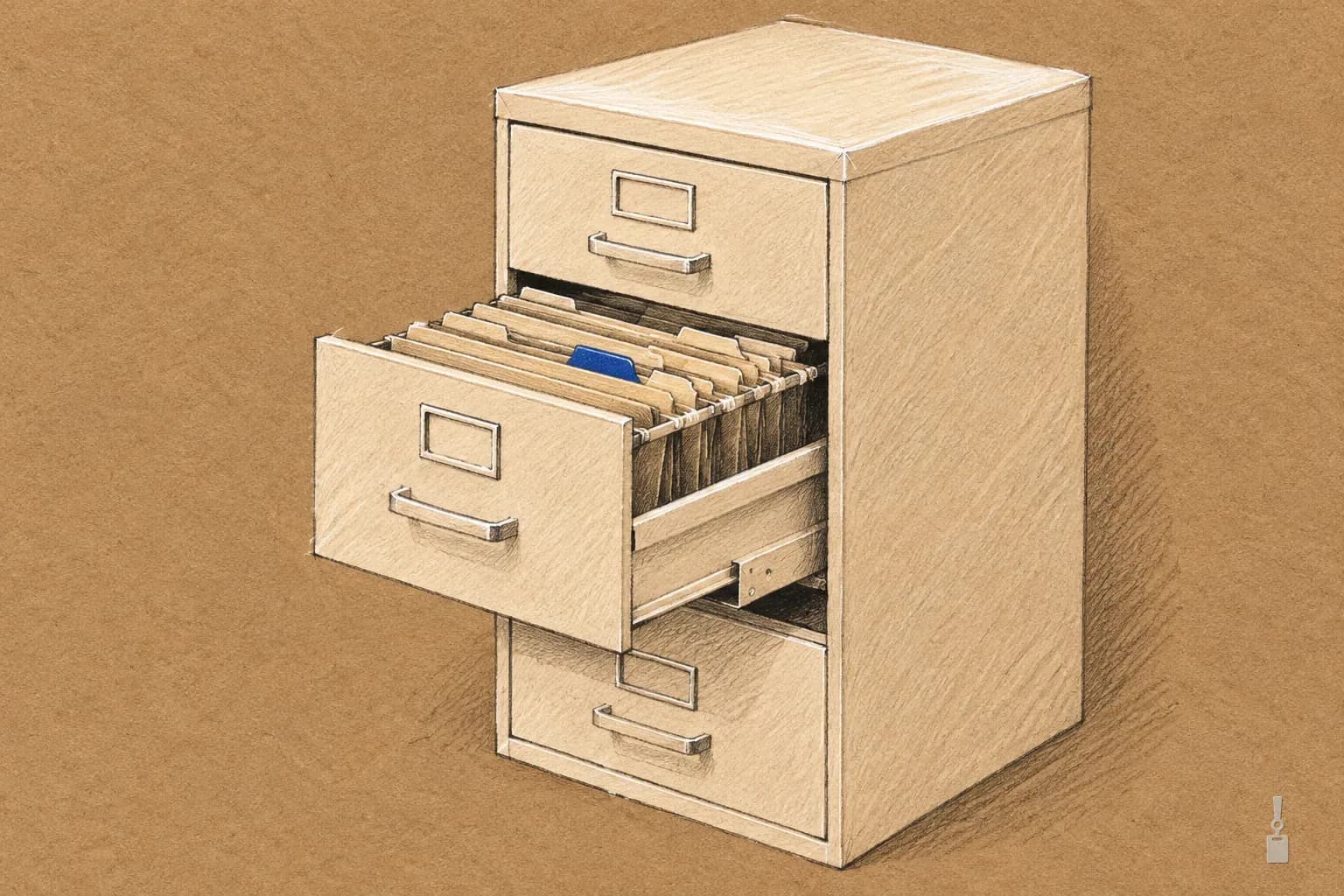
Four employees from one file drawer. Keep until is the later of the last two columns in each row; the tool's batch mode produces this table from a pasted list.
| Employee | Keep until | First day | Ended | Hire + 3 years | End + 1 year |
|---|---|---|---|---|---|
| Warehouse associate | 2026-03-06 | 2023-03-06 | 2024-08-30 | 2026-03-06 | 2025-08-30 |
| Office manager | 2026-11-14 | 2019-06-03 | 2025-11-14 | 2022-06-03 | 2026-11-14 |
| Seasonal driver | 2027-03-01 | 2024-02-29 | 2024-12-20 | 2027-03-01 | 2025-12-20 |
| Bookkeeper | Keep on file | 2021-09-13 | Still employed | 2024-09-13 | None yet |
The warehouse associate worked under two years, so three years after the hire date governs. The office manager worked over six years, so the form stays until a year after the last day. The bookkeeper is still on payroll, and a current employee's form is never destroyed; once they leave, enter the end date. Before a purge, run the I-9 audit checklist over the forms you are keeping.
State notes
- Federal
The Form I-9 retention period comes from federal regulation, so the calculator gives the same date in every state. Your state's rules for personnel and payroll records are separate and may run on a different clock, so check them before you shred a whole personnel file rather than the I-9 alone.
Some states require E-Verify for some or all employers; see E-Verify requirements by state. For forms you keep, a work authorization that expires is reverified on Supplement B: date it with the I-9 reverification calculator. If you keep forms electronically, the I-9 software comparison covers which systems calculate purge dates for you.